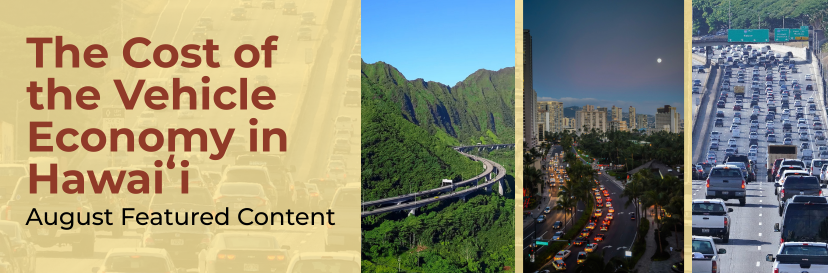


Our featured content for August is the Ulupono Initiative’s 2025 Report on The Cost of the Vehicle Economy in Hawaiʻi. This report highlights the cost of the vehicle economy, comprising both the direct and indirect costs to the public and the additional costs associated with personal vehicle ownership in Hawaiʻi. It also aims to approximate the true annual cost of the vehicle economy across the state.
Highlights from the report include:
- The cost of the vehicle economy in Hawaiʻi totals to $27.4 billion each year, with the majority of those costs ($16.6 billion) incurred by the public. Before accounting for any personal vehicle expenses, this amounts to an annual cost of $33,600 for each Hawaiʻi household.
- Households in Hawaiʻi that own personal vehicles carry an additional $21,800 in private vehicle ownership costs, totaling to a transportation burden of more than $55,400 each year.
- Injuries and fatalities are the largest indirect cost associated with the vehicle economy in Hawaiʻi.
- According to DOH EMS Injury Prevention System Branch data on Hawaiʻi Health Matters, in Hawaiʻi, 23.7 people per 100,000 people visited the emergency department or were hospitalized for non-fatal injuries as a pedestrian in 2019.
- Greenhouse gas emissions and air pollution are driving detrimental climate and health impacts. Poor air quality as a result of vehicle emissions contributes to respiratory illness, which can reduce work productivity, increase long-term medical costs, and limit quality of life. These burdens fall disproportionately on residents in urban areas, near tourist hubs, and along major highways, who are more exposed to pollution and congestion.
- According to National Environmental Public Health Tracking Network data on Hawaiʻi Health Matters, 7.5% of people in Hawaiʻi live within 150 meters, or about two blocks, from a major highway.
- Lower income households in Hawaiʻi are disproportionately affected by the increasingly higher costs associated with vehicle ownership and by the health impacts of personal vehicle usage. Lower income neighborhoods in Hawaiʻi are also more likely to have a higher rate of vehicle crashes and road injuries.
Hawaiʻi Health Matters provides additional health indicators related to vehicle usage in Hawaiʻi. View the custom dashboard of indicators here.